Strength Training
With Roar Fitness
Build strength that changes what your body can do. Learn to lift with confidence, improve physical performance and develop the capability to stay active throughout life.








Every Lift Planned and Coached
Getting stronger expands what you can do: carry your children, lift your luggage, perform better in sport and remain independent as you age. Resistance training develops muscle, supports bone density and joint stability, and improves how your body manages blood glucose. The benefits extend well beyond the gym.
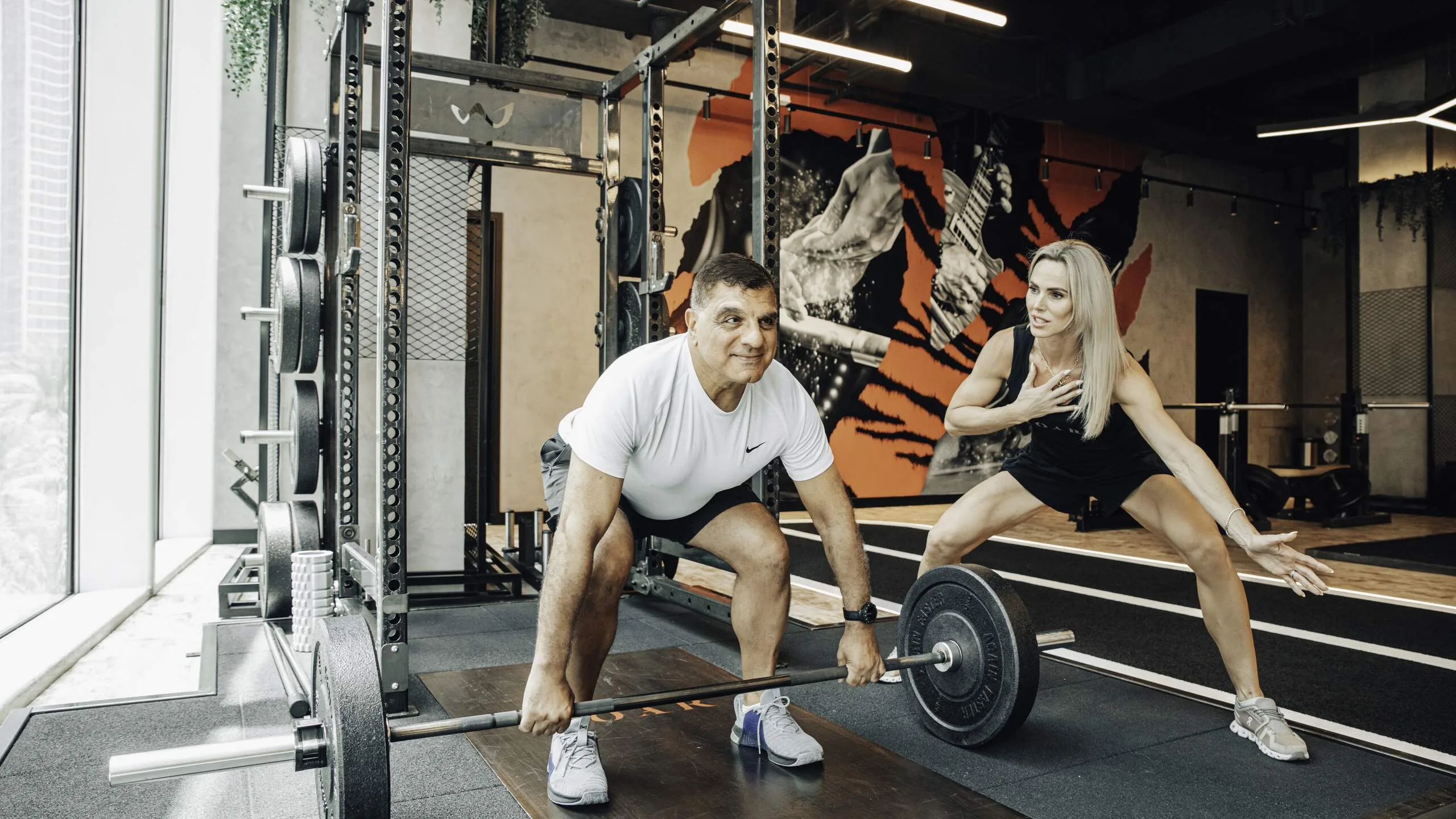
Strength training underpins every Roar programme. For clients who want to focus on strength itself, we combine purposeful programming with detailed technical coaching. You learn how to position, brace and move under load, then progress through challenges appropriate to your ability. Every session develops your understanding alongside your strength.
Book a Free Consultation
Strength Results From Roar Clients

Matthew Holder-Bizou
Shoulder press up from 6kg to 17.5kg dumbbells

Lynsey Williams
Stronger and 32kg lighter at 43

Lucy Cleland
Stronger and leaner at 49

Jonathan Fraser
Rebuilt his strength in 12 weeks

Teresa Twigg
Walking taller and stronger at 60

Michael Du
From untrained to a 120kg leg press
How Your Training Works
Your programme gives you a clear starting point, a structured route forward and the skills to make strength training part of your life.
Free Consultation
Meet us at City of London, Kensington or Downtown Dubai. Discuss your goals, previous training, health, and injury history, whether you want to learn the fundamentals, improve specific lifts or build strength for sport and everyday life.
Assessment
Movement and biomechanics assessments, baseline health markers and body composition establish your starting point. We assess your control, mobility, any imbalances and current strength to select suitable exercises and starting loads.
Your Training Plan
Your plan is built around compound lifts and runs in phases, each with a clear focus such as technique, building volume or lifting heavier. Every session is one to one with a focus on progression, teaching you the purpose of each exercise and how to execute with perfect technique.
Nutrition and Recovery
Your dedicated nutrition coach plans food intake to fuel training and support adaptation. Your trainer manages training demands alongside your recovery, with guidance on adjustments or deloads when fatigue affects performance.
Regular Check-Ins
Review your performance, consistency and recovery with your trainer. Recorded loads, repetitions and exercise execution show where you are improving and help identify what needs attention before progressing further.
Retest and Next Phase
Compare your performance against your baseline using repeatable exercises and consistent technique. Your next phase builds on those improvements, with clear targets and an understanding of how to work towards them.
Strength Training Exercises
Strength develops across a range of movement patterns. Your trainer selects the exercises that suit your biomechanics, experience and goals, allowing for any injuries and teaching the foundations before increasing the challenge.
Squat
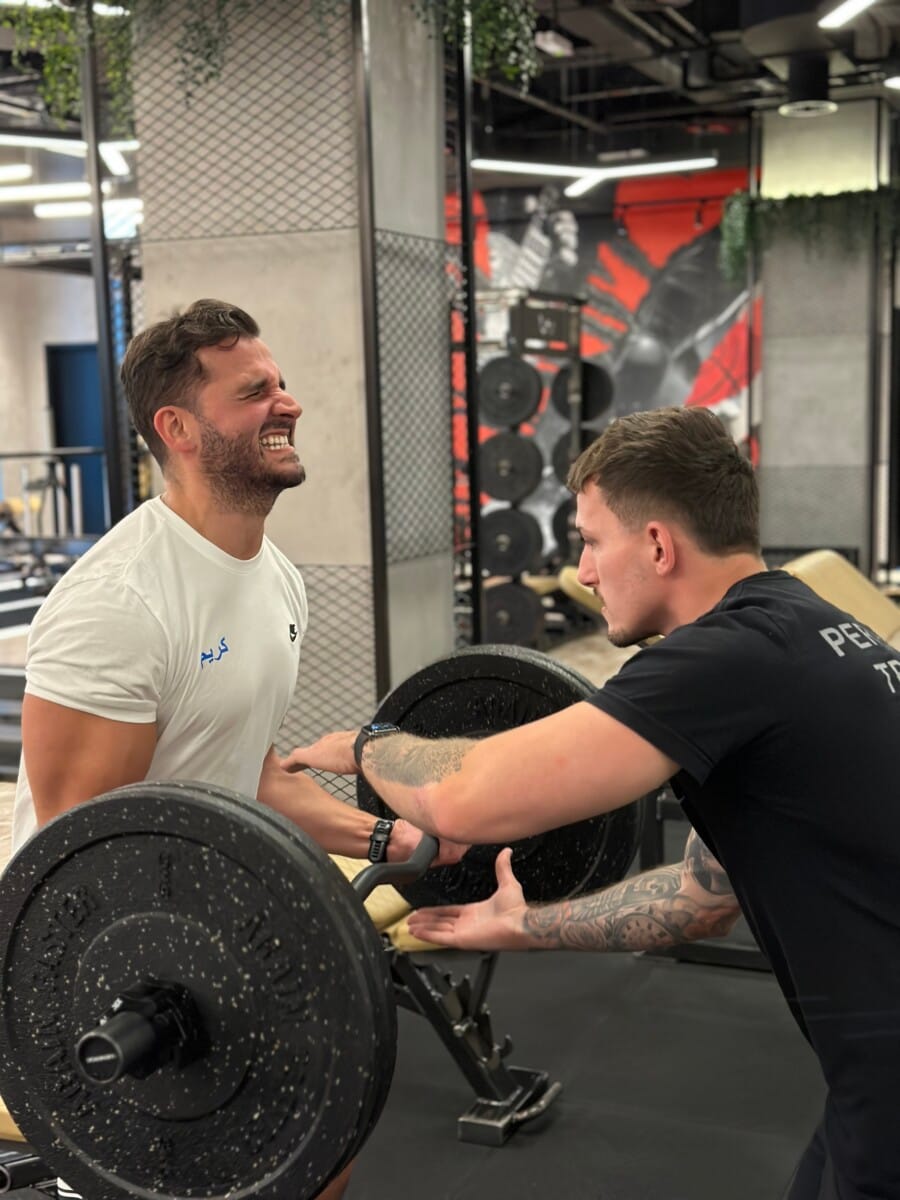
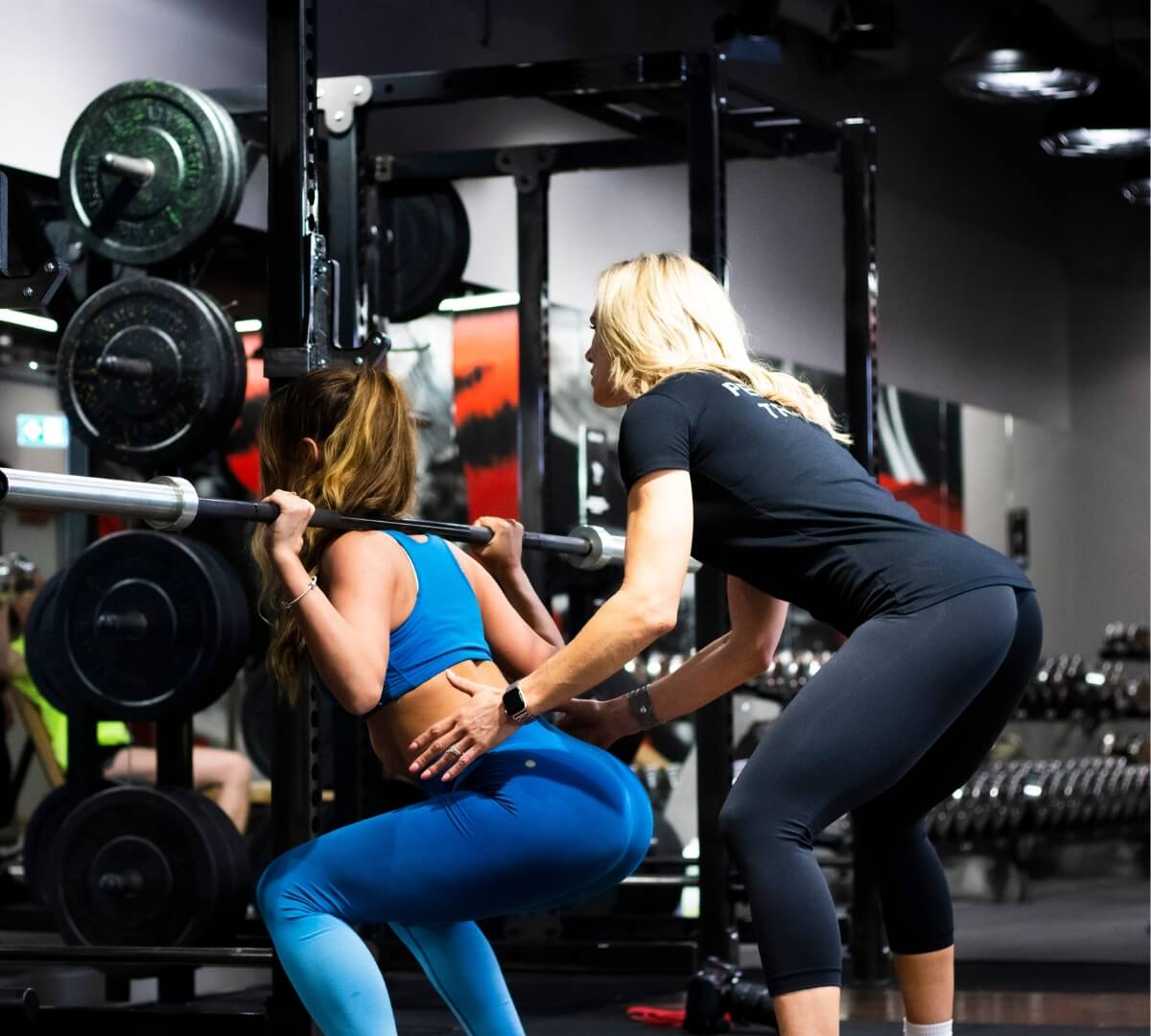
Squat variations develop lower-body strength through coordinated hip and knee extension. Your trainer selects stance, depth and load placement around your proportions and mobility, coaching bracing and control so you can produce force consistently under increasing load.
Hinge
Deadlift and Romanian deadlift variations load the glutes and hamstrings while challenging trunk stability. Hip position, knee angle and the path of the weight influence where the demand falls. Your trainer coaches these details to develop posterior-chain strength with controlled execution.
Press
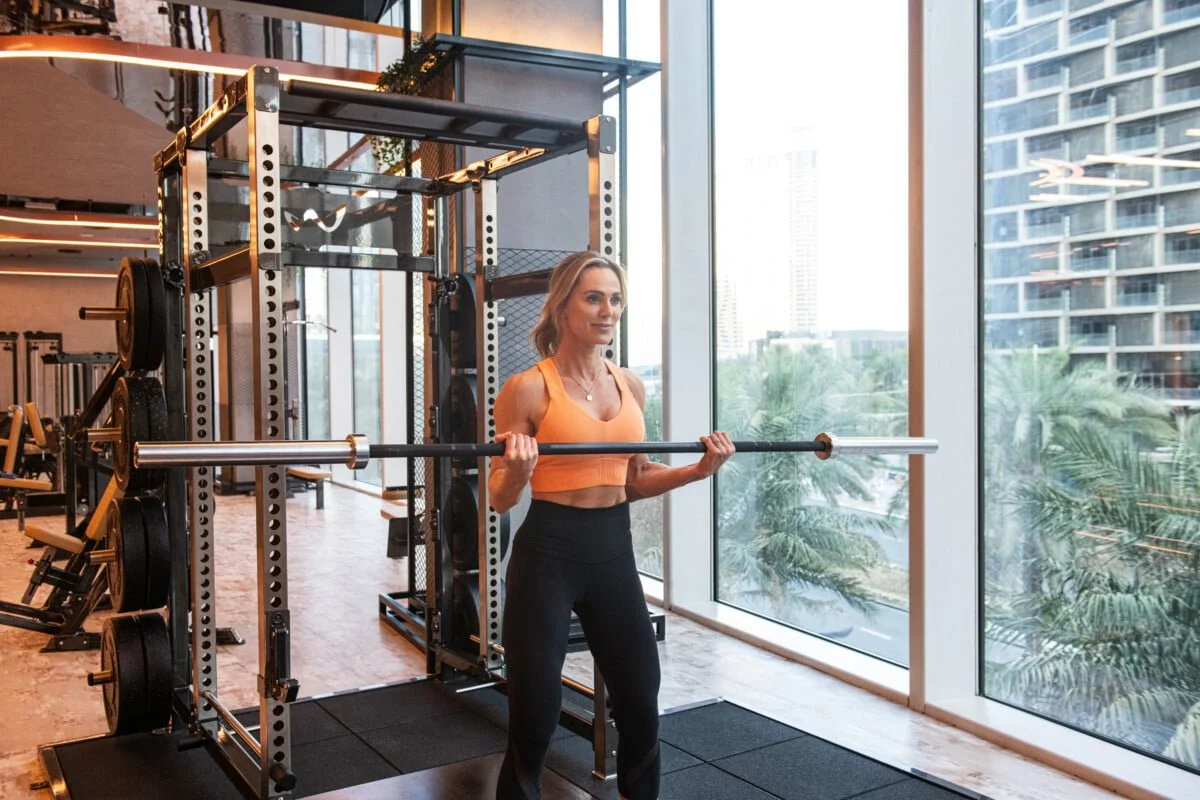
Horizontal and overhead presses develop strength through the chest, shoulders and triceps. Grip, elbow position and pressing angle influence joint mechanics and muscular contribution. Your trainer selects variations that let you challenge these muscles through an appropriate, repeatable range.
Pull
Rows, pulldowns and pull-ups develop back and arm strength through different shoulder and elbow actions. Your trainer adjusts grip, torso position and the line of pull to target specific functions, coaching shoulder-blade movement and control rather than simply moving the weight. Matthew Holder-Bizou went from no pull-ups to five.
Carry
Loaded carries challenge grip, trunk stiffness and whole-body coordination under sustained resistance. Bilateral and unilateral variations create different demands, including resisting sideways bending and rotation. Load, distance and duration are progressed according to the strength quality being developed.
Push and Drive
Sled work on our Sled Tracks develop horizontal force production through repeated leg drive and a stable trunk. Heavier loads emphasise force; lighter loads moved faster emphasise speed and power. Your trainer sets resistance, distance and recovery to produce the intended training effect.
How We Build Your Strength
Strength improves as your muscles develop and your nervous system becomes more effective at coordinating movement and producing force. Roar programming develops both, with technique and repeatable progress at the centre of every phase.
Progressive Overload
As your capacity grows, the challenge progresses. Your trainer increases load, repetitions or appropriate training volume while maintaining the intended technique. Session records show those improvements and inform when you are ready for the next step.
The Main Lifts
Squat, hinge, press and pull variations provide a foundation for developing strength across the body. Your trainer chooses the versions that suit you, using free weights, machines and supporting exercises according to your needs.
Technique
Setup, breathing, bracing, alignment and range of movement affect how you produce and control force. Your trainer coaches these details throughout each session, helping you understand the movement and maintain control as the load increases.
Planned Phases
Each phase has a defined purpose, from establishing movement skills and training capacity to developing strength under heavier loads. Exercises remain consistent enough to practise and measure, with changes made when they serve your progress.
Power and Speed
Strength is your ability to produce force; power involves producing it quickly. Where appropriate, your programme includes movements that develop speed and responsiveness, drawing on the way Sarah Lindsay trained as a three-time Olympian. This supports sporting performance and the ability to react to physical demands as you age.
Recovery
Recovery is planned alongside training to help you maintain performance and maximise progress. Sleep, nutrition and training load form the foundation, managed by your personal trainer and nutrition coach together. Your recovery plan reflects the demands of your programme and your long-term goals.
Meet Your Personal Trainers
Every ROAR personal trainer is trained in the ROAR Method, developed by three-time Olympian Sarah Lindsay and Rich Phillipps, named by Men’s Health as the UK’s leading body transformation expert.
Our team combines experience in strength and conditioning and competitive sport with a track record spanning thousands of client transformations. That expertise translates into structured programming and precise coaching: understanding your biomechanics, developing consistent technique and progressing load with purpose. Every session builds your strength and your understanding of how to train effectively.
Meet the Trainers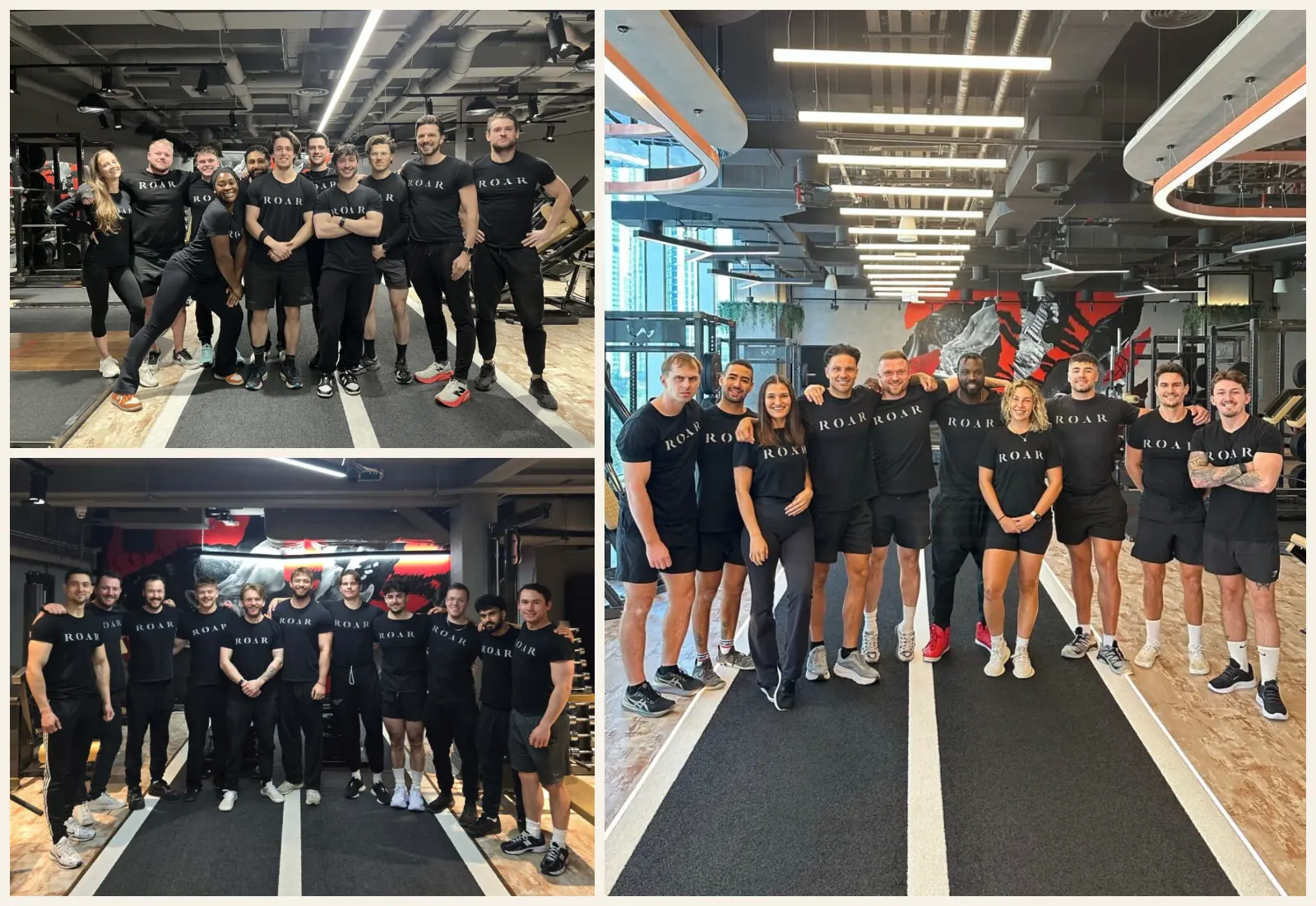
“The UK’s leading expert in
body transformations”

Recovery Is Part of the Plan
Your capacity to recover influences the quality of your next session and the progress you can sustain. We help you recognise how sleep, stress and nutrition affect performance and recovery, so you learn when to push and when to adjust. The longer-term goal is to develop strength you can continue building throughout life.
Book a Free Consultation
Choose Your Focus
Other Goals We Train For
Explore other ROAR programmes to improve body composition, develop muscle and support long-term health.


Book Your
Free Consultation
Frequently Asked Questions
Answers to the questions we hear most about strength training with a personal trainer. Anything else, ask us at your free consultation.
Do I need a personal trainer for strength training?
You can strength train independently, but skilled coaching helps you learn the fundamentals and apply them consistently. At Roar, your trainer teaches technique, plans progression and explains the decisions behind your programme. You build the knowledge to understand your training alongside measurable strength.
How often should I strength train?
Two or three sessions per week can produce meaningful improvements. Your schedule is based on your starting point, goals, availability and recovery. Consistent, productive sessions matter more than adding training days you cannot sustain.
How long does it take to get stronger?
Improvements can become apparent within weeks as technique and coordination develop. Further gains follow consistent, progressive training, with training history and recovery influencing the pace. Matthew Holder-Bizou increased his shoulder press from 6kg to 17.5kg dumbbells over 24 weeks.
What is the difference between strength training and bodybuilding?
Strength training prioritises your ability to produce force. Bodybuilding prioritises muscular size, shape and symmetry. They overlap, but a strength-focused programme places greater emphasis on practising movements, developing coordination and progressing the load you can control. You do not need bodybuilding ambitions to benefit from lifting weights. If size is your main goal see our muscle building programmes.
Is strength training safe with an injury or back pain?
Usually yes. Many people can strength train with appropriate adaptations, but the right approach depends on the condition and symptoms. We review your history and movement, seeking medical or physiotherapy guidance where needed. Exercises, range of movement and loads are selected around your current capabilities and any clinical advice.
Is strength training good for women?
Yes. It develops strength and muscular shape, supports bone density and helps maintain physical capability. These benefits become particularly important through menopause, when declining oestrogen can accelerate bone loss. Lynsey Williams became stronger and lost 32kg over 15 months, beginning at 43. Your programme reflects your goals and experience.
Am I too old to start strength training?
No. Older adults remain capable of developing strength, and starting can improve the physical capacity needed for everyday independence. Teresa Twigg began with ROAR at 60. Your trainer establishes an appropriate starting point and progresses the demands as your ability improves.
Do I need gym experience to start?
No. Learning how to strength train is a valid goal in itself. Your trainer teaches the movements, explains how to use the equipment and helps you understand loads, repetitions and rest periods. You develop confidence through practice and clear progression.
What happens in my first session?
Before training begins, your assessment establishes your movement, health and strength baseline. Your first training session introduces the prescribed exercises in your programme, with close attention to setup, breathing, control and appropriate starting loads.
How much does strength training with a personal trainer cost?
Pricing depends on your location, programme length and number of sessions. Your free consultation covers the recommended programme, what it includes and the full cost.
Where can I do strength training with Roar?
At our private gyms in the City of London, Kensington and Downtown Dubai. Both London gyms are part of our personal training in London. If you are based in the UAE, read about personal training in Dubai. You can also train from anywhere with online personal training.